

The Yen Carry Trade Is Unwinding – But This Isn’t 2008
The real story is a healthy reset – and a buying window for AI infrastructure stocks
Wall Street just logged its best Thanksgiving week since 2012. The Dow jumped 2.7%, the S&P 500 3.7%, and the Nasdaq 4.4% – a holiday surge powered by rate-cut fever and a burst of optimism.
And then, just as December cheer took hold, an old ghost returned. The yen carry trade began to unwind, spooking traders and knocking markets off balance.
“Japan is breaking the global financial system!” “This could be another Lehman!”
Suddenly, Japan is at the center of the world’s financial anxiety. Its central bank may finally raise rates after decades near zero; and that single shift could rattle everything from Bitcoin (BTC/USD) to the S&P.
Here’s why: for years, investors have borrowed cheap yen to chase higher-yielding assets – U.S. stocks, Treasurys, even crypto. But when the yen strengthens and borrowing costs rise, that ‘free-money’ trade flips.
Traders start selling to unwind, dumping BTC and equities to repay yen loans. The same fuel that inflated asset prices on the way up is now burning off on the way down.
Yes, that’s a real risk. But it’s not a repeat of 2008. And it’s definitely not signaling the end of the AI boom.
Let’s break down what’s really happening – calmly, and in plain English…
What Is the Yen Carry Trade – And Why It Fueled Markets for Decades
For more than two decades, Japan ran the cheapest money machine in the world.
While interest rates fluctuated in the U.S., Europe, and emerging markets, Japan stayed near zero – and often below it – creating an enticing opportunity:
- Borrow yen at near-zero interest.
- Convert those yen into dollars.
- Invest the money into higher-return assets like U.S. Treasuries, high-growth tech stocks, and cryptos.
If you can borrow at ~0% and earn 5- to 10% elsewhere, you pocket the difference. That difference is the ‘carry’ – hence, the yen carry trade.
It was one of the most profitable, low-stress macro trades for years. And like all long-running, low-volatility trades, it attracted hedge funds, proprietary trading desks, structured products, global macro portfolios, and even corporate treasury strategies.
The longer it worked, the bigger it got.
What Changed: Japanese Rate Hikes and the Trigger for the Unwind
But with Japanese inflation proving sticky, the Bank of Japan is hiking rates and pulling back bond purchases.
Japanese bond yields are now ripping to their highest levels since 2008, blowing a hole in the carry-trade math. Funding costs are no longer basically zero. Suddenly, what used to be a sleepy money-printing machine is a real threat.
And that creates “unwind” risk:
- Investors who borrowed yen to buy foreign assets now face higher funding costs and the risk that the yen strengthens versus the dollar.
- If the yen strengthens, their debt becomes more expensive to repay in dollar terms.
- To reduce risk, they do the only thing they can: sell the assets they bought, convert dollars back into yen, and pay down liabilities.
- That selling hits U.S. equities, emerging markets, crypto, treasuries, and anything that had heavy foreign macro participation.
Clearly, there are legitimate reasons why folks are anxious about this – especially because the yen carry trade is quite large.
How a Yen Trade Unwind Can Ripple Through Stocks, Crypto and Global Liquidity
We don’t have perfect transparency, but conservative estimates put the core leveraged carry trade in the hundreds of billions, with broader yen-funded exposure in the low trillions.
That’s enough size to create real selling pressure, move prices meaningfully, and temporarily tighten global liquidity.
Plus, the transition could be violent.
That is, carry trades unwind violently when volatility rises, funding costs spike, currency moves become unstable, and margin calls trigger cascades.
Those cascades can feel sudden, sharp, and emotionally brutal on price charts. Just look at the nosedive Bitcoin took over the last few days.
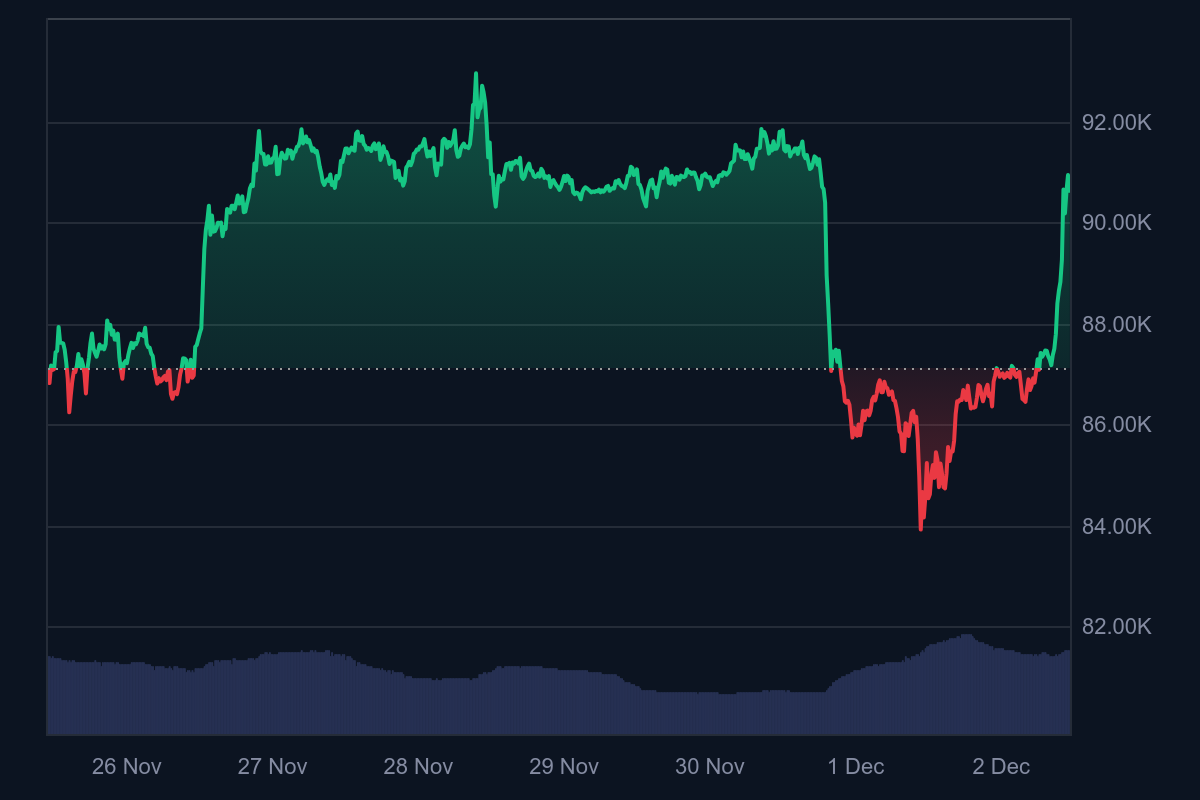
And importantly, this unwind is hitting a time when markets are really crowded on the long side. Everyone is already long tech, AI, and crypto. The yen carry trade was one of the hidden fuel sources supporting those trades; and removing even part of that fuel causes turbulence.
So, yes, this is a real macro stressor.
But here’s the key part most people miss…
Why This Isn’t 2008 – No Credit Crisis, Just Funding Repricing
Markets love to turn plumbing issues into apocalypse narratives. The yen carry trade is the latest example.
From our point of view, the hysteria is overblown.
For starters, Japan is not blind to systemic risk. It runs the largest sovereign debt market on Earth. Policymakers in Tokyo wholly understand that violent bond instability would ripple across every major financial system.
They are not carelessly detonating their own plumbing. They are slowly moving toward normalization, being highly sensitive to market functioning and explicitly focusing on avoiding disorderly conditions.
In other words, this is not 2008-style policy recklessness.
Markets Are Adjusting to Higher Yen Funding Costs, Not Collapsing
Additionally, this is a repositioning, not a credit shock.
A true systemic financial crisis requires insolvency – banks failing, credit freezing, counterparties blowing up. What we’re dealing with here is positioning, leverage, and funding assumptions. Those cause volatility. They do not automatically cause economic collapse.
Traders getting squeezed is not the same thing as the financial system breaking.
Currency Volatility Doesn’t Mean Economic Collapse
We’re also talking about a pure financial market dynamic here. The unwind hits asset prices, funding markets, foreign exchange (FX) positioning, and speculative leverage. It does not directly hit consumer demand, corporate cash flows, government spending, or industrial production. That’s why this stays largely contained inside financial markets and not the broader economy, barring extreme policy errors.
The Yen Carry Trade’s True Scale and Market Impact
And then there’s the size of this unwind…
Estimates peg the entire yen carry-trade complex at roughly $1- to $2 trillion. That sounds scary – until you remember that it’s not all levered, and it won’t all unwind.
Even if 20% comes off the table, that’s about $400 billion of potential selling. The total U.S. stock market measures nearly $70 trillion. That’s a 0.6% hit. And it’s a one-time adjustment, not an ongoing drain.
Bottom line: The yen carry trade is a real but temporary headwind. It should not change your long-term directional view.
When Panic Creates Opportunity: Pullbacks Could Set Up the Next Run
At the end of the day, we need to analyze how the yen carry trade will impact the AI Boom because – if we’re being brutally honest – that’s the only trade Wall Street cares about right now. Everything else is background.
So, how does the yen carry trade impact the fundamentals of the AI Boom?
Well… it doesn’t.
The yen carry trade is a financial funding mechanism. The AI Boom is a real-world industrial transformation.
They are not the same thing.
The AI Boom is being driven by:
- Data center construction
- Semiconductor fabrication
- Power generation build-outs
- Networking infrastructure
- Autonomous systems
- Corporate automation
- National security investment
These are strategic, long-duration capital projects – not hot-money macro flows.
Companies building the physical backbone of artificial intelligence do not cancel multi-year spending plans because a hedge fund in London trimmed a yen-funded position or because a derivatives desk in Singapore unwound a currency swap.
The compute arms race does not pause for FX volatility.
So, if this unwind creates forced selling, liquidity stress, and volatility spikes…
Then it will also create better entry prices, higher expected forward returns, and stronger setups for the next leg higher.
The Final Word
We’re still in the early industrial phase of artificial intelligence.
Data centers still need power. GPUs still need to be manufactured. Networks still need to be built. Compute still needs to scale.
The technology cycle does not end because one funding trade is repricing.
After all, markets have seen carry trade panics before. We saw versions of this during:
- The Asian Currency Crisis
- The 2008 funding freeze
- The 2020 COVID shock
- Regional banking stress in 2023
And each time, the system adapted, liquidity returned, and the dominant growth trends resumed.
The yen carry trade unwind fits that historical pattern far more closely than it fits a world-ending crisis template.
Yes, markets are volatile. But every shakeout clears the way for the next great opportunity.
This time, it’s not crypto or meme stocks. It’s something far bigger – an $11.3 trillion reinvestment in America itself.
As the world retools for AI, energy independence, and automation, trillions are flowing into small U.S. innovators: the ones building the physical backbone of the future.
That’s where I’m focusing to get positioned for once-in-a-generation gains.
And on Monday, Dec. 8 at 10 a.m. EST – alongside Louis Navellier and Eric Fry – I’ll show you the companies poised to multiply as the “American Dream 2.0” takes hold.
Reserve your seat to learn about the stocks we believe 2,400%–8,500% upside potential.